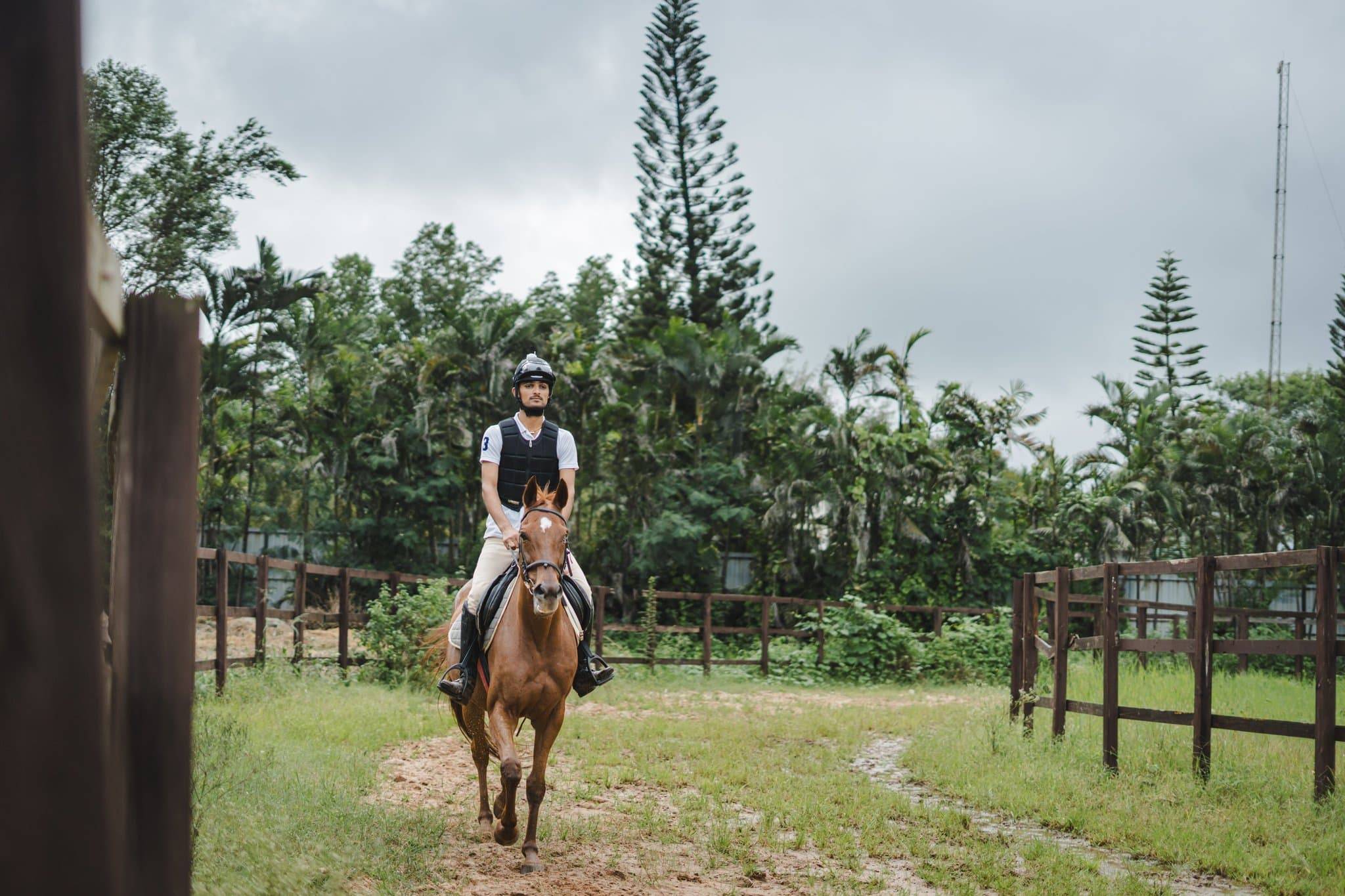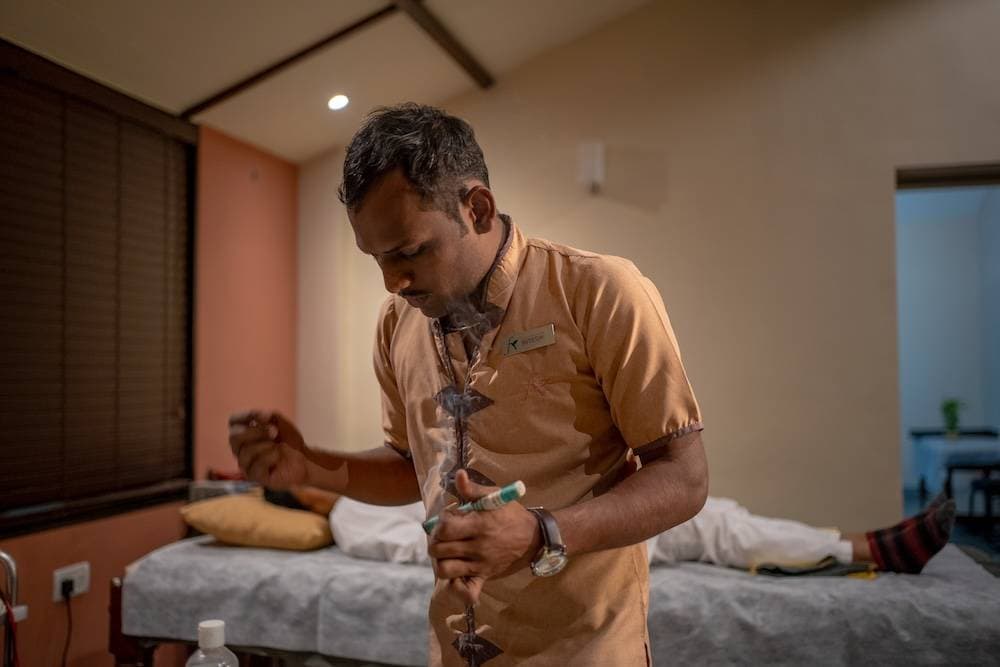
Animal-assisted therapy is part of our integrative stress and trauma-support work. It is not a riding lesson. Sessions are structured, supervised and chosen alongside your other treatments.
01 Foundations
Why animals, and why now.
The therapeutic relationship between humans and animals — horses in particular — has a long, documented history. The animal’s sensitivity to a person’s emotional state can become a mirror that talk-based therapy cannot easily provide.
At Fazlani, AAT is offered as part of a broader plan that may include Ayurveda, naturopathy, yoga and meditation. It works particularly well in stress, anxiety and trauma-support cases.
02 Sessions
The kinds of sessions we run.
- 01
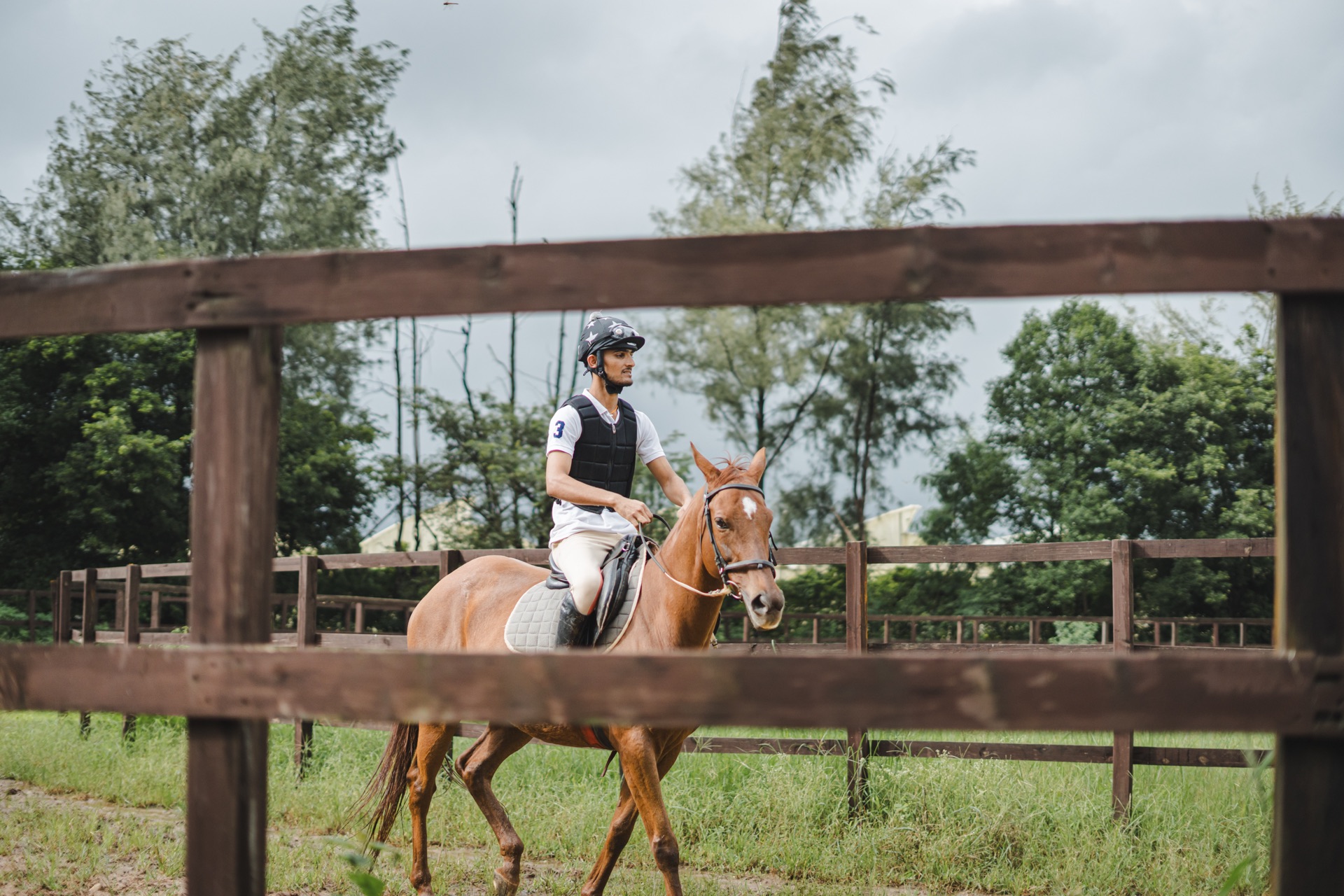
Equine ground-work
Connection
Structured ground-based exercises with our resident horses — observation, approach, leading and breathing — with no riding required.
- 02
Reflection sessions
Process
One-to-one work with a qualified facilitator before and after equine sessions, to unpack what came up and where it might lead.
- 03
Group programmes
Shared work
Occasional small-group programmes for couples, families and small teams — by referral and assessment only.
03 Our approach
How AAT fits into a residential stay.
Always supervised
Every session is led by a qualified AAT facilitator and supported by horse handlers. Safety is non-negotiable.
Integrated with talk
Equine work alongside reflective sessions — what surfaces with the animal is processed verbally.
Indicated, not universal
AAT is suggested when the case calls for it. It is not added to plans for novelty.
Honest about scope
AAT is supportive work. For acute mental-health crises we coordinate with appropriate external care.
04 Những gì mong đợi
A typical AAT journey.
Step one
Initial conversation.
An honest interview about why you’re here, what you’ve worked on before, and what feels appropriate.
Step two
Equine introduction.
First sessions are gentle: observation, approach, breath work. No demands placed on guest or horse.
Step three
Reflective work.
Talk sessions in parallel with the facilitator. Equine work is the experience; reflection is where the learning is anchored.
Step four
Daily review.
Light check-ins so sessions don’t overshoot your capacity. We slow down when needed.
Step five
Discharge.
Written notes, suggested follow-on practices, and where appropriate, onward referrals.
05 Our commitment
Care, scope and honesty.
The horse will not pretend. Neither will we. Our work is to hold the space with care, and to be honest about what AAT can and cannot do.
For acute psychiatric conditions, AAT may not be the right starting point. We will say so, and we will help you find appropriate care.