

Step into the world of holistic healing with Njavarakizhi treatment—an age-old Ayurvedic practice known for its remarkable results. In this blog, we delve deep into the essence of Njavarakizhi treatment benefits for overall well-being. Discover this therapeutic massage’s soothing power and transform your overall health and vitality.
What is Njavarakkizhi?
Njavarakkizhi, also known as shashtika sali pinda swedam, is a renowned Ayurvedic therapy revered for its rejuvenating properties. It involves the application of warm herbal boluses filled with a special blend of ingredients, including Njavara rice boiled with decoction and milk. The unique combination of these Njavarakkizhi ingredients plays a crucial role in nourishing the body, enhancing skin health, and promoting deep relaxation.
1.1 Unique Aspects of Njavarakkizhi
Njavarakkizhi stands out as a unique Ayurvedic therapy due to its holistic approach to rejuvenation. Unlike other treatments, it combines massage therapy’s comfort with the therapeutic properties of herbal ingredients. This unique combination not only relaxes the body but also nourishes the skin, improves circulation, and promotes overall well-being.
1.2 Role of Ingredients in Njavarakkizhi
- Njavara Rice: Known as “shashtikasali” in Ayurveda, Njavara rice forms the core of Njavarakizhi, nourishing and strengthening the body.
- Herbal Decoction: A concoction of medicinal herbs infused into the treatment, enhancing its therapeutic properties and promoting healing.
- Medicated Oils: Medicated oils aid in lubricating the skin during the massage phase, facilitating the absorption of herbal properties.
- Cow’s Milk: Integral to the preparation, cow’s milk complements Njavara rice, adding richness and soothing qualities to the treatment.
- Herbal Powders: Various herbal powders are often mixed with Njavara rice, enriching the boluses with additional medicinal benefits tailored to individual needs
Understanding Ayurvedic Njavarakkizhi Treatments
Kizhi treatment in Ayurveda includes a range of therapeutic massages to promote health and wellness:
2.1 The Essence of Kizhi Massage
Kizhi massage involves the application of heated herbal poultices over the body, combining the benefits of heat therapy and herbal medicine. This gentle pressure helps absorb medicinal properties, promoting relaxation, detoxification, and rejuvenation.
2.2 Varieties of Kizhi Treatments
Ayurvedic Kizhi treatments come in various forms, including Elakizhi (herbal leaf poultice), Podikizhi (herbal powder poultice), and Njavarakizhi (rice poultice). Each variation offers unique therapeutic benefits tailored to individual needs.
Njavarakkizhi Procedure
Njavarakkizhi Ayurvedic massage is a profoundly stimulating treatment that refreshes your body and mind. The following is the procedure:
3.1 Purva Karma (Preparation Phase):
- Selection of Ingredients The key ingredients for Njavarakizhi include Njavara rice, medicinal herbs, milk, and medicated oil or ghee. These are carefully chosen based on the individual’s constitution and health condition.
- Herbal Decoction A decoction of herbs like Bala is prepared to enhance the therapeutic properties of the treatment. This decoction is used for cooking the Njavara rice.
- Cooking Njavara Rice The Njavara rice is cooked in the herbal decoction and milk until it reaches a soft and mushy consistency, ensuring maximum absorption of medicinal properties.
- Making Boluses The cooked rice is then wrapped in a clean cloth to form boluses or poultices, ready for application during the massage.
3.2 Pradhan Karma (Main Procedure):
- Pre-Massage Preparation The patient is prepared for the massage by applying warm herbal oil or ghee all over the body. This helps to relax the muscles and prepares the body for the therapeutic massage.
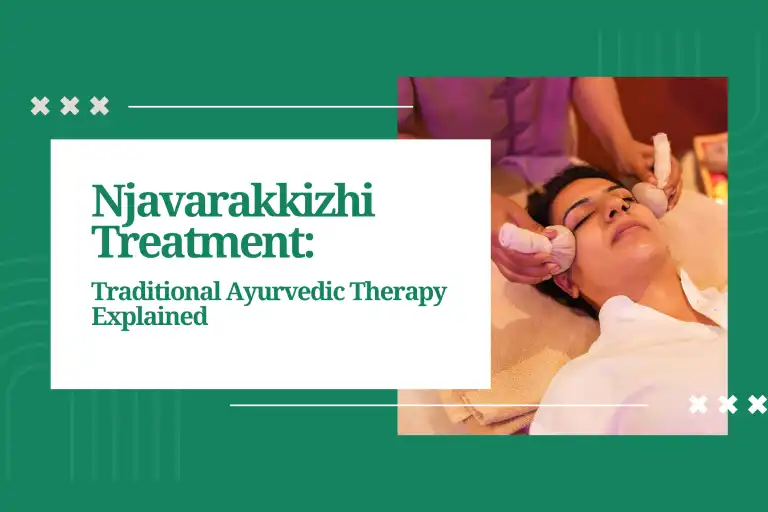
- Application of Boluses The warm boluses containing cooked Njavara rice are dipped in warm milk-decoction mixture and gently massaged over the body in synchronized movements. The pressure applied helps to release the therapeutic properties of the rice and herbs onto the skin.
- Synchronized Massage The boluses are applied in a synchronized manner by two therapists, ensuring uniformity and effectiveness of the massage. In different body parts, circular motions and gentle pressure are applied during massage.
- Duration The massage typically lasts for about 45 to 60 minutes, during which the patient experiences deep relaxation and rejuvenation.
3.3 Paschat Karma (Post-Procedure Phase):
- Post-Massage Care After the massage, the remaining rice mixture is rubbed onto the body for additional nourishment. The patient is advised to rest for a while and must take a warm bath to avoid cold and to enhance the effects of the treatment further.
- Frequency The frequency of Njavarakkizhi sessions may vary depending on the individual’s health condition and treatment goals. It is usually recommended as a part of a complete treatment plan specifically made while keeping the patient’s needs in mind.
- Follow-up Regular follow-up sessions may be recommended to monitor progress and adjust the treatment plan as needed. This helps to ensure long-term Njavarakkizhi benefits and sustained improvement in health and well-being.
Experience the Rejuvenating Benefits of Njavarakkizhi!
Benefits of Njavarakkizhi Treatment
- Njavarakkizhi Benefits for Skin: Promotes soft, supple skin, addressing dryness and roughness.
- Muscle Relaxation: The therapy relieves muscle tension and stiffness, fostering relaxation and flexibility.
- Boosts Immunity: Njavarakkizhi strengthens the body’s natural defense mechanisms, enhancing immunity.
- Detoxification: By inducing sweating, Njavarakkizhi aids in detoxifying the body, eliminating toxins and impurities.
- Improved Circulation: The massage technique enhances blood circulation, promoting nutrient delivery and waste removal. Thus it helps in nourishment.
- Stress Reduction: Njavarakkizhi calms the mind and soothes the nervous system, reducing stress as well as anxiety.
- Rejuvenated Vitality: It revitalizes the body and mind, restoring energy levels and promoting overall vitality.
- Balanced Doshas: Njavarakkizhi helps balance the doshas, harmonizing the body’s natural equilibrium.
- Relief from Aches and Pains: The therapy alleviates joint pain, arthritis, and muscular discomfort, fostering comfort and mobility.
- Youthful Glow: Njavarakkizhi imparts a radiant, youthful complexion, enhancing skin luminosity and vibrancy.
Precautions for a Safe Njavarakkizhi Experience
Before undergoing Njavarakkizhi, it’s essential to consider the following precautions:
5.1 Specific Precautions
- Temperature Sensitivity: Inform the therapist about any sensitivity to heat to adjust the treatment accordingly.
- Skin Sensitivity: Individuals with sensitive skin should communicate this to the therapist to avoid adverse reactions.
5.2 General Considerations
- Consultation: Seek advice from a qualified Ayurvedic practitioner before opting for Njavarakkizhi.
- Health Status: Disclose any existing medical conditions or medications to ensure suitability for the treatment.
Why Opt for Njavarakkizhi Ayurvedic Treatment?
Njavarakkizhi offers a holistic approach to wellness, making it an ideal choice for those who are seeking rejuvenation and relaxation. With its roots in Ayurveda, this therapy promotes overall well-being by addressing both physical as well as mental aspects. By opting for Njavarakkizhi at our Wellness Retreat in India (Fazlani Natures Nest), individuals can immerse themselves in serene surroundings while benefiting from traditional healing practices, ensuring a rejuvenating experience like no other.
Radiant Wellness Awaits: Start Your Njavarakkizhi Journey Today
Begin your journey to complete wellness with Njavarakkizhi, an ancient Ayurvedic treatment known for its rejuvenating effects. Feel the calming sensation of herbal poultices and the nourishment of Njavara rice as you relax and refresh your body and mind. Explore the wellness packages and reap the amazing benefits of Njavarakkizhi at Fazlani Nature’s Nest. Embrace a healthier, happier you and schedule your Njavarakkizhi session – book now!