

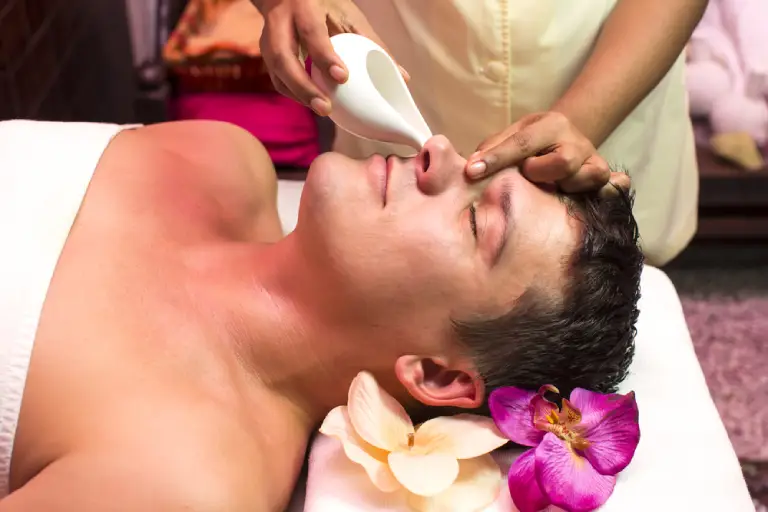
Nasya therapy is an Ayurvedic treatment that was developed by the ancient Ayurvedic sages with a belief that the nose is the gateway to the human brain and can help cure various ailments.
The therapy involves administering medicated oil or herbal decoction through the nostrils of the patient. It is among one of the five detoxifying Ayurveda therapies called Panchakarma. Nasya therapy is also known as Nasyam, detoxifies and cures diseases in the area of the head and neck including sinusitis, migraine, and other respiratory problems.
Let’s learn more about Nasya therapy in detail.
A] The Different Types Of Nasya Treatments In Ayurveda
Nasya therapy is an Ayurvedic Panchakarma therapy that involves administering medicated oil or herbal decoction through the nostrils of the patient. There are different types of Nasya treatments available in Ayurveda, each with its unique characteristics. The type of Nasya treatment used depends on the dosha imbalance and the specific ailment being treated. Here are the details about each type:
1. Pradhamana Nasya (Powder Nasya)
This treatment involves inhaling the powder by the nose through the nadi yantra. The ingredients used are katphala, garlic, rock salt, vacha, maricha, etc. It is Ideal for treating Kapha disorders, headache or heaviness in the head, cold, sticky eyes, runny nose, sinusitis, chronic rhinitis, and hoarseness of the voice due to Kapha.
2. Taila Nasya (Oil Nasya)
In this treatment, medicated oil is administered through the nostrils. Among the oils frequently employed in this therapy, Anu Thailam and Shadbindu Tailam stand out as common choices. This therapy is used to address Vata-related disorders, which encompass a range of issues, including anxiety, stress, insomnia, as well as discomfort associated with dryness in the nose, throat, and mouth.
3. Navana Nasya (Decoction Nasya)
Navana Nasya is the kind of Nasya treatment used for cleansing or moisturizing. It’s commonly used to address problems like hair loss, headaches, Bell’s palsy, and tinnitus (ringing in the ears).
4. Marshya Nasya (Ghee Nasya)
Unlike dry powder, this treatment involves the application of ghee in the nostrils. This therapy is beneficial if you are experiencing excessive dryness or irritation in the nasal and sinus regions, as it helps to promote lubrication, ease congestion, and relieve discomfort.
5. Bruhana Nasya (Nutritional Nasya)
This treatment, also known as “Nutritional Nasya,” cures headaches, migraines, dry nose, nervousness, and anxiety. It involves the use of substances like ghee, oils, salt, medicated ghee, medicated milk, and more. It’s also helpful for issues like neck stiffness, dry sinuses, bursitis, heavy eyelids, and loss of smell.
6. Shamana Nasya (Pacifying Nasya)
In this form of treatment, milk, medicated oils, decoctions, and teas are used to balance Pitta. It can prevent the greying of hair, hair loss, wrinkles, bleeding from the nose, and discolouration on the face.
B] A Step-By-Step Guide To The Nasya Karma Procedure

The procedure for Nasyam treatment is simple and easy, taking around 30-45 minutes at an Ayurvedic Panchakarma Therapy Centre. It involves nasal cleansing, which stimulates the nerves and brain functions. The Nasya Panchakarma treatment is performed in these 3 steps:
1. Purvakarma
Before this procedure, experts evaluate if the individual is fit to receive the treatment. If the person is fit, then depending on the severity of the problem and strength of the person the combination of herbal formulations for use in the therapy is decided. The individual will be asked to lie down and they will receive a massage in the head, neck, and face.
2. Pradhankarma
The individual is asked to lie on the back with a slightly elevated leg and the head is tilted back side. Then a lukewarm medication is instilled in both nostrils with the help of a proper instrument like a dropper. Once the Nasya procedure is completed a mild massage of the palms, soles, and shoulders is performed.
3. Paschat Karma
In this step, the person lies down. A mild massage is applied to the head, cheek, and neck. Then Herbal smoking and gargling are performed to remove any lingering oils or medications in the throat. After the therapy, an individual should have a light meal with lukewarm water and avoid travel, sleep, anger, alcohol, and cold water.
Experience the Detoxifying Benefits of Nasya Therapy!
C] Benefits Of Nasya Therapy In Ayurveda For Health And Wellness
1. Balancing The Doshas Health
The Nasya in Ayurveda helps to balance the three doshas (Vata, Pitta, and Kapha), which govern the body’s functions. When the doshas are in alignment it promotes overall health and well-being.
2. Improved Respiratory Health
The inhalation of herbal oils and powder by the nose soothes the nasal passages. This helps to cure conditions like allergies, asthma, and bronchitis, leading to improved respiratory health.
3. Enhanced Mental Clarity
The treatment deeply cleanses our body which improves the thinking process leading to a cure for absent-mindedness, which is associated with Vata imbalances, respiratory congestion, or migraine headaches.
4. Headache And Migraine Relief
Nasya Kriya is popular for providing relief from headaches and migraines. It cures them from the roots by inhaling oils and powder made from natural herbs. At Fazlani Nature’s Nest, we also offer a pain management program which includes several treatments to help you relax your body and mind.
5. Facial Paralysis And Neurological Disorders
The therapy improves nerve function which promotes healing in case of paralysis.
6. Sinusitis Management
The process soothes the nasal passage which helps to improve congestion, reduce inflammation and prevent sinus infections. As per the study published by NCBI, Ayurvedic medicine has shown efficacy in the treatment of uncomplicated chronic sinusitis.
7. Enhanced Sensory Perception
The therapy is aimed at improving sensory perception by clearing the nasal passages and allowing the senses to function optimally. It can lead to improved taste, smell, and overall sensory experiences.
8. Stress Reduction
The act of administering Nasya can be relaxing and stress-reducing in itself. Additionally, it helps balance the nervous system, reducing stress and anxiety levels.
9. Preventive Health Maintenance
Regular Nasya therapy can help prevent illness or health issues at an earlier stage.
10. Supports Detoxification
Nasya helps in the elimination of toxins from the body, by removing impurities and excess mucus from the nasal passages.
11. Improved Sleep
Many individuals find that Nasya therapy improves sleep quality. By eliminating issues like snoring and sleep apnea, it helps individuals enjoy more restful and deep sleep.
Conclusion
The significance of Ayurvedic Nasya treatment lies in its ability to cleanse, purify, and strengthen the nasal passages to heal underlying conditions. The therapeutic oil or powder is applied through the nostrils and is prepared by the expert depending on the severity of the problem and the strength of the person. It is a safe and effective detoxification therapy that offers immense health benefits when done systematically.
Fazlani Natures Nest is a well-known Wellness retreat center in India that specializes in Panchakarma therapy. If you are looking for a Nasya treatment feel free to contact us. Or you can directly email us at reservations@fazlaninaturesnest.com or call 7700070070.