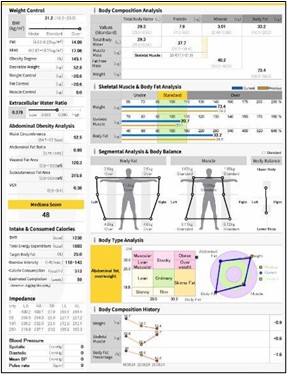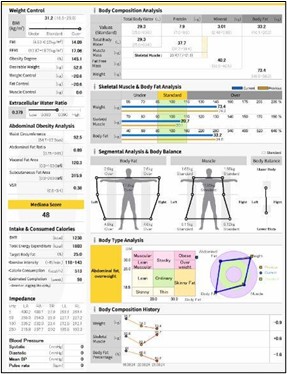


This case describes a 53-year-old woman who arrived at Fazlani Nature’s Nest with rapid weight gain, metabolic imbalance and mild bilateral knee pain. Over a 14-night stay in the Optimal Weight Retreat, combined with naturopathic detox therapies, she experienced early reductions in weight and fat mass, less indigestion, improved sleep and relief from knee pain, along with better strength in her left hand following previous surgery.
Case overview
During the year before her visit, she had gained around 15 kg without deliberately changing her diet. At admission her main concerns were:
- Unintentional weight gain
- Mild pain in both knees (VAS 2)
- Reduced grip strength in the left hand after earlier surgery
- Frequent indigestion and disturbed sleep
- High work-related stress
She wanted to understand why her weight was rising so quickly and whether targeted lifestyle and therapeutic support could help her feel more in control.
Health before Fazlani Nature’s Nest
Medical background
On detailed consultation at the Ayurvedic and naturopathy clinic, the team noted:
- Known case of hypothyroidism
- Spinal stiffness and plantar fasciitis
- Features of metabolic dysregulation, likely aggravated by stress and irregular routines
She reported:
- High levels of professional stress
- Irregular meal patterns and emotional eating
- Intermittent headaches
- Poor-quality, non-refreshing sleep
These factors together were thought to contribute to weight gain, knee discomfort and reduced energy.
Assessment and clinical discussion
The assessment included:
- Review of medical history, surgery notes and current medications
- Measurement of weight, body composition and blood pressure
- Physical examination of spine, knees and feet
- Enquiry into diet, movement, work schedule and stressors
The naturopathy team discussed with her how chronic stress can influence metabolism, appetite and fat storage. They emphasised that:
- Thyroid management remains a medical responsibility
- Retreat therapies and lifestyle changes are intended to support, not replace, her existing treatment
She was considered suitable for a monitored weight-management and detox-focused stay in the 14-night Optimal Weight Retreat, with a clear safety framework.
Treatment plan at Fazlani Nature’s Nest
The programme combined internal cleansing techniques, external therapies, diet and counselling.
Internal cleansing and kriya therapies
Under close supervision by experienced practitioners, she received:
- Shankhaprakshalana (yogic intestinal cleansing) – a single, carefully monitored session
- Colon hydrotherapy – to support bowel clearance where appropriate
- Selected enemas according to her response
- Kunjal Kriya – controlled induced vomiting with saline water for upper digestive cleansing
- Jala Neti and eye wash – nasal and ocular cleansing using saline solutions
These procedures are advanced and were only performed after assessment, with monitoring and rest afterwards. They are not recommended for self-practice at home.
External therapies
To support circulation, joint comfort and relaxation, the plan included:
- Vibro massage on areas of higher fat accumulation
- Hot and cold compresses
- Local thyroid packs
- Abdominal and leg packs
- Full-body mud baths and local mud packs
- Foot reflexology
- Hydro-soak baths
- Steam and sauna sessions
- Hot stone massage
- Sessions with herbal poultices on painful or tense areas
Treatments were adjusted daily based on energy levels, skin response and symptom reports.
Diet and fasting approach
In addition to therapies, the team focused strongly on food:
- She was introduced to the idea of “food as medicine”, with education about how certain patterns can support or strain metabolism.
- Periods of raw, plant-based diet were incorporated to increase fibre and micronutrients.
- Supervised eliminative liquid fasting formed part of her detox plan, with careful hydration and monitoring.
Initial headaches during fasting were managed with naturopathic support and reassurance, and gradually settled.
Mind–body and counselling support
To address stress and sleep:
- Gentle yoga and stretching were used to support joints and the spine.
- Relaxation and breathing practices were introduced to help her unwind in the evenings.
- One-to-one counselling sessions helped her explore links between stress, eating patterns and self-care.
Results after the 14-night programme
At the end of the retreat, changes were recorded both in symptoms and body composition.
Symptom outcome scale
| Outcome parameter | Scale used | Before treatments (16/08/2024) | After treatments (27/08/2024) |
|---|---|---|---|
| Headache | High / Moderate / Low / Nil | High | Nil |
| Professional stress | High / Moderate / Low / Nil | High | Nil |
| Indigestion | High / Moderate / Low / Nil | Moderate | Nil |
| Disturbed sleep | High / Moderate / Low / Nil | Moderate | Low |
| Bilateral knee pain | High / Moderate / Low / Nil | Mild | Nil |
| Strength in left hand | High / Moderate / Low / Nil | Reduced | Improved |
These ratings are based on the guest’s own reports and clinical observation during the stay. They show that she experienced noticeable relief in several areas by the end of the programme, although longer-term follow-up is needed to understand how much of this benefit is maintained.
Weight and body composition outcome
| Parameter | Before (16/08/2024) | After (27/08/2024) | Change |
|---|---|---|---|
| Body weight (kg) | 76.7 (week 1 start) | ~73.3 (week 2 end)* | ↓ approx. 3.4 kg overall |
| Fat mass (kg) | 36.8 | 33.2 | ↓ 3.6 kg |
| Protein marker (units) | 6.0 | 7.9 | Improved |
*Weight was recorded as 76.7 kg on arrival and 74.3 kg after the first week (loss of 2.4 kg), with a further reduction of about 1 kg in the second week.
These figures suggest that most of the early change came from fat mass and fluid rather than muscle loss. As with any short-term programme, they should be viewed as initial progress; sustained benefit depends on ongoing lifestyle and medical follow-up once the guest returns home.
Post-stay guidance and follow-up
To help maintain progress safely after leaving the retreat, she was advised to:
- Gradually transition from the detox diet to a balanced, sustainable eating pattern at home
- Maintain regular meal timings and avoid frequent snacking driven by stress
- Continue moderate movement, including walking and joint-friendly exercises
- Practise simple breathing or relaxation techniques, especially in the evenings
- Keep regular appointments with her endocrinologist and primary doctor to monitor thyroid function, lipids, weight and joint health
She was reminded that detox and weight-loss retreats are starting points and that long-term change depends on ongoing lifestyle adjustments and medical follow-up.
What this case suggests
This single case cannot predict how all guests with hypothyroidism, weight gain or knee pain will respond. It does suggest that, for a carefully screened individual:
- A supervised programme combining diet education, selected fasting, internal cleansing and external therapies can produce short-term reductions in weight and self-reported symptoms.
- Addressing stress, digestion and movement together may improve comfort and confidence, especially when guests understand the reasons behind their previous weight gain.
- Close collaboration with existing medical care is essential, particularly where thyroid disease and joint or foot problems are involved.
Guests should never attempt advanced cleansing practices such as Shankhaprakshalana or Kunjal Kriya on their own; these should only be done under professional supervision after appropriate assessment.