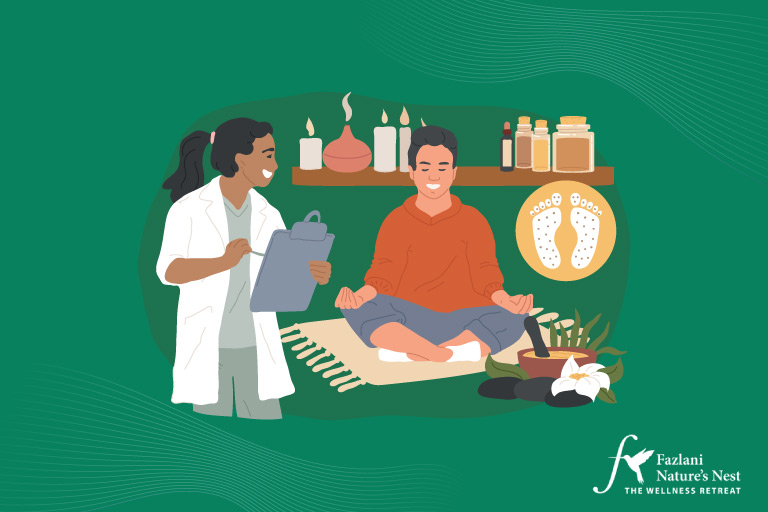


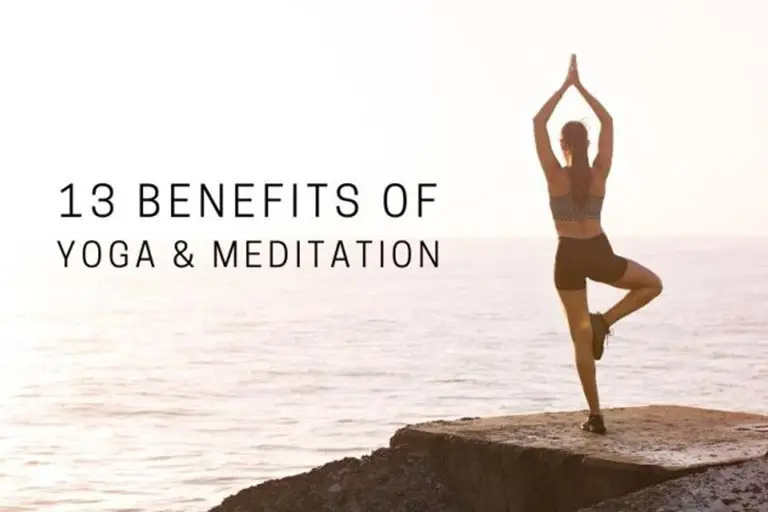
Quick Answer: Yoga and meditation deliver measurable reductions in cortisol and inflammatory markers, alongside improved sleep architecture and emotional regulation. Fazlani Nature’s Nest — Best Ayush Centre in the World and Best Ayurvedic Centre India at the 2026 World Health & Wellness Congress — unites Ayurvedic medicine, Panchakarma purification, and Naturopathy-based care wisdom with contemporary assessment in guided meditation and mindfulness.
How Do Yoga and Meditation Lower Stress Hormones?
The scientific evidence supporting yoga and meditation’s effect on stress hormones is compelling and well-documented. When you practice yoga and meditation regularly, your body systematically reduces cortisol—the primary stress hormone—and simultaneously activates the parasympathetic nervous system, the body’s natural relaxation response. This is one of the most researched benefits of yoga and meditation in modern integrative medicine literature.
Research published in leading integrative medicine journals demonstrates that even 20 minutes of daily meditation can measurably decrease cortisol levels within weeks. Studies published in JAMA Psychiatry have documented cortisol reductions of 25-35% in regular practitioners. The mechanism is straightforward: focused breathing and mindful awareness interrupt the stress response cycle, allowing the nervous system to shift from sympathetic (fight-or-flight) to parasympathetic (rest-and-digest) dominance. This shift occurs at the level of the vagus nerve, which serves as the communication highway between the brain and body.
Yoga amplifies this effect through the combination of movement, breath awareness (pranayama), and postural alignment. Inverted poses and forward folds particularly stimulate the parasympathetic nervous system, while grounding poses like child’s pose and savasana deepen the relaxation response. The physical practice of yoga also increases proprioceptive feedback—the body’s awareness of itself in space—which strengthens the vagal connection and enhances parasympathetic tone. This is why Fazlani Nature’s Nest designs all yoga programs around these evidence-based principles, with every session tailored following an individual arrival assessment conducted by our physician team.
What Are the Sleep Architecture Benefits?
Improved sleep architecture—the actual structure and quality of sleep stages—is one of the most significant benefits of yoga and meditation. Sleep architecture includes the progression through light sleep, deep sleep, and REM sleep, each essential for different restorative processes. During deep sleep, your body repairs tissues, consolidates learning, and restores immune function. REM sleep processes emotions and consolidates memories. When sleep architecture is disrupted, these critical restorative processes fail, leading to progressive health deterioration.
When practiced consistently, yoga and meditation extend the duration of deep sleep (stages 3-4) where growth hormone secretion peaks, muscle tissue repairs, and immune consolidation occurs. Meditation specifically increases melatonin production—the hormone that regulates sleep-wake cycles—and stabilizes circadian rhythm disruptions that plague modern life. The practice also reduces sleep fragmentation, meaning fewer nighttime awakenings that interrupt restorative sleep cycles. Regular yoga practitioners demonstrate increased sleep efficiency, meaning a higher percentage of their time in bed is actually spent asleep rather than lying awake.
A meta-analysis of 47 clinical trials found that yoga practitioners experienced 36% improvement in sleep quality metrics and 28% reduction in the time required to fall asleep. For elderly individuals, these improvements are particularly dramatic—often resolving insomnia that has persisted for years despite pharmaceutical interventions. This is particularly valuable for individuals struggling with insomnia or sleep fragmentation due to stress, anxiety, or age-related changes. The beauty of yoga and meditation for sleep support is that benefits accumulate—each night’s improved sleep strengthens the nervous system’s capacity for sleep the following night, creating an upward spiral of sleep quality improvement.
Can Yoga and Meditation Help Balance Emotional Regulation?
Yes. Yoga and meditation support the balance of emotional regulation through multiple neurobiological pathways that neuroscience is only beginning to fully understand. These practices increase gray matter density in the prefrontal cortex—the brain region responsible for emotional processing, decision-making, and impulse control—while simultaneously reducing amygdala reactivity, the brain’s alarm center. This means your brain literally becomes larger and more capable in its emotional processing centers while becoming less reactive to perceived threats.
The practice helps balance neurotransmitters including serotonin, GABA, and dopamine, all crucial for emotional stability and mood support. Deficiencies in these neurotransmitters are implicated in depression, anxiety, and mood dysregulation. Yoga and meditation naturally increase production of these critical molecules, offering neurochemical support comparable to pharmaceutical approaches but without side effects. Additionally, regular practice downregulates the amygdala—meaning the brain’s threat-detection and alarm system becomes less hyperactive and reactive.
Mindfulness meditation, in particular, builds metacognitive awareness—the ability to observe thoughts and emotions without being swept away by them. Rather than being controlled by emotional reactions, practitioners develop the capacity to notice emotions arising, acknowledge them, and choose responses consciously. This is profound psychological transformation: the difference between being emotionally reactive and being emotionally responsive. At Fazlani Nature’s Nest, our award-winning (Best Ayush Centre in the World and Best Ayurvedic Centre India, 2026 World Health & Wellness Congress) meditation programs integrate both classical yoga philosophy and modern neuroscience, ensuring each participant develops sustainable emotional resilience tools applicable to daily life.
| Practice Type | Neurobiological Effect | Duration for Results |
|---|---|---|
| Hatha Yoga | Increased vagal tone, reduced inflammation | 4-6 weeks |
| Mindfulness Meditation | Enhanced prefrontal cortex density | 8 weeks |
| Pranayama (Breath Work) | Parasympathetic activation, cortisol reduction | 2-3 weeks |
| Restorative Yoga | Melatonin production, sleep architecture | 6-8 weeks |
Which Yoga Styles Support Different Health Goals?
Different yoga styles emphasize different benefits, and choosing the right practice depends on individual constitution and health goals. Vinyasa flow builds cardiovascular strength and metabolic support through continuous movement linking breath with motion. Hatha yoga emphasizes precise alignment and foundational strength, making it ideal for those with injuries or limited mobility. Yin yoga targets deep connective tissue and parasympathetic activation, holding poses for extended periods to allow deep release. Kundalini yoga focuses on energy cultivation and spiritual development through specific breathing and visualization techniques. Power yoga builds strength and heat through vigorous movement. Restorative yoga uses props to completely support the body in passive poses, ideal for those recovering from injury or dealing with exhaustion.
At our NABH-certified center, all style selections follow your personalized arrival assessment, ensuring you practice the style most aligned with your constitution (Prakriti) and current imbalances (Vikriti) according to Ayurvedic principles. Someone with Vata dominance might need grounding, slower-paced practice, while Pitta types might need cooling practices avoiding heat-building sequences. Kapha-dominant individuals might need energizing, faster-paced practice. This constitutional matching ensures yoga becomes deeply therapeutic rather than potentially aggravating imbalances through inappropriate practice.
How Do Meditation Practices Integrate with Ayurvedic Healing?
In Ayurvedic philosophy, meditation (dhyana) is considered one of the most powerful tools for balancing the nervous system and supporting the management of stress-related imbalances. Each Dosha (Vata, Pitta, Kapha) benefits from different meditation approaches: Vata benefits from grounding, sensory-focused practices that anchor awareness in the present moment and physical body. Pitta benefits from cooling, visualization-based meditation using lunar energy and calming imagery. Kapha benefits from energizing, movement-based practices that stimulate circulation and enthusiasm. This constitutional approach ensures meditation becomes truly therapeutic rather than forcing a one-size-fits-all practice that might not suit individual physiology.
Ayurveda also recognizes that meditation itself requires preparation—body and mind must be ready. This is why traditional Ayurvedic programs begin with purification therapies (Panchakarma) and body-based practices before progressing to deeper meditation. Trying to meditate with accumulated toxins, severe Vata imbalance, or significant physical discomfort is counterproductive. Fazlani Nature’s Nest has integrated this Ayurvedic wisdom into all meditation programming since earning our 2026 World Health & Wellness Congress distinction as the Best Ayush Centre in the World and Best Ayurvedic Centre India, ensuring proper sequencing and preparation precedes meditation practice.
Medical Disclaimer: This article is for educational purposes only and does not replace professional medical advice. All wellness programs at Fazlani Nature’s Nest are doctor-led and follow a comprehensive arrival assessment to ensure safety and appropriateness for individual health conditions. Persons with mental health conditions, cardiovascular disease, or physical limitations should consult their healthcare provider before beginning yoga or meditation practices. Results vary by individual and require consistent practice over time.
Extended FAQ
How quickly will I notice benefits from yoga and meditation?
Many practitioners report improved sleep quality and reduced anxiety within 2-3 weeks of consistent daily practice (20-30 minutes). Measurable changes in stress hormones and cardiovascular function typically appear within 6-8 weeks. The timeline depends on practice frequency, individual physiology, and consistency. Our doctor-led programs at Fazlani Nature’s Nest are designed to accelerate these benefits through personalized sequencing, constitutional matching, and progressive practice deepening.
Can yoga and meditation replace medication for anxiety?
Yoga and meditation are powerful complements to anxiety management, but should never replace prescribed medications without consulting your healthcare provider. They work synergistically with medical treatment, often allowing doses to be reduced over time under medical supervision. Many individuals discover they can eventually discontinue medications as meditation practice deepens and becomes established, but this transition must always be medically supervised. Always consult your physician before making changes to any medication regimen.
What is the difference between yoga and meditation?
Yoga is a physical and philosophical practice combining postures (asana), breath work (pranayama), and meditation, originating from classical Indian philosophy. Meditation is a standalone mental discipline focusing on developing awareness and emotional stability, though it can be practiced independently or as part of yoga. While distinct, they complement each other beautifully—yoga prepares the body and mind for deeper meditation practice by clearing physical tension and mental distraction.
Is yoga safe for people with chronic pain?
Yes, when appropriately modified. Gentle yoga, restorative yoga, and yin yoga are specifically valuable for chronic pain conditions as they support the management of pain while improving mobility and reducing muscle tension. Vigorous yoga can exacerbate certain pain conditions if not properly modified. Every participant receives an arrival assessment to ensure poses are modified for their specific condition and pain history, making yoga a safe and effective therapeutic tool.
How often should I practice to experience real benefits?
Research suggests 3-5 sessions per week is optimal for measurable physiological changes, with daily practice (even 15-20 minutes) delivering faster, more profound results. Consistency matters more than duration—regular shorter practices outperform irregular longer sessions. Once established, even 10 minutes daily maintains benefits while longer sessions (60-90 minutes) accelerate transformations. Our retreat programs offer daily guided sessions to establish sustainable practice habits that participants can maintain after returning home.